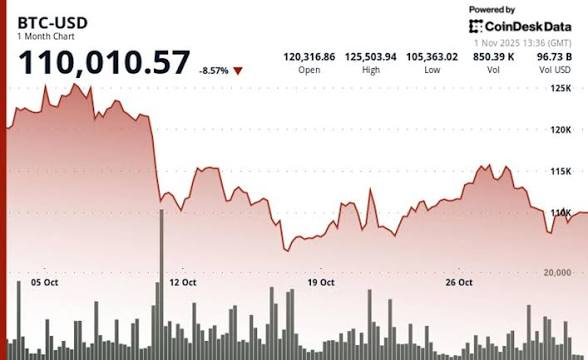

The crypto market began the new week on shaky ground, with major digital assets experiencing significant declines amid a wave of macro uncertainty. Over $550 million in leveraged long liquidations were reported, signaling heightened volatility and defensive positioning among investors. This downturn highlights the growing influence of traditional financial pressures on the cryptocurrency landscape, as traders weigh geopolitical tensions, currency fluctuations, and fiscal risks.
In this comprehensive article, we’ll break down the key market dynamics, the impact on leading cryptocurrencies like Bitcoin and Ethereum, and the broader implications for crypto investors.
Key Takeaways
- Macro uncertainty triggered over $550 million in crypto liquidations as Bitcoin and Ether faced intense selling pressure.
- Tariff threats, U.S. shutdown risks, and yen volatility drove a broader shift toward safe-haven assets such as gold and silver.
- Derivatives markets turned defensive, with rising volatility and increasing demand for Bitcoin downside protection.
Crypto Market Recap: Early Week Sell-Off
After a relatively stable weekend, crypto prices began sliding during early Asian trading hours, reflecting market participants’ concerns over broader financial instability.
- Bitcoin (BTC) briefly dipped to around $86,000 before stabilizing.
- Ethereum (ETH) fell toward the $2,785 mark.
This pullback was in stark contrast to traditional safe-haven assets like gold and silver, which continued their upward trend as investors rotated into lower-risk investments.
Bitcoin Price Action
Bitcoin, often dubbed the digital gold, faced over $550 million in liquidations during the recent downturn. Short-term support around $86,000 prevented further steep declines, but investors remain wary amid ongoing macro uncertainty. The BTC market now reflects a heightened sensitivity to traditional financial pressures, including interest rate expectations and geopolitical developments.
Ethereum Price Action
Ethereum mirrored Bitcoin’s vulnerability, dropping toward $2,785. While ETH’s fundamentals, including its transition to proof-of-stake and growing DeFi adoption, remain strong, market sentiment continues to drive near-term price swings. Investors are now closely watching ETH for potential recovery signals and derivative market activity.
Tariff Threats, Shutdown Fears, and FX Uncertainty Weigh on Markets
Market analysts have identified a cluster of macro developments contributing to crypto volatility.
Tariff Tensions
Comments from former President Donald Trump regarding the potential imposition of 100% tariffs on Canadian imports fueled market anxiety, triggering defensive trading behavior. This uncertainty prompted investors to unwind leveraged positions, particularly in volatile cryptocurrencies.
U.S. Government Shutdown Risk
Concerns over a partial U.S. government shutdown added another layer of tension. Spending bills remain in a stalemate between House Republicans and Senate Democrats, with government funding set to expire on January 30. According to Polymarket, there’s roughly a 75% probability of a shutdown, reminiscent of last year’s fiscal standoff that coincided with sharp crypto sell-offs.
Currency Market Volatility
The USD/JPY pair has emerged as a significant pressure point. The New York Fed’s “rate check” highlighted growing sensitivity to yen depreciation, with 160 widely viewed as an intervention threshold. Currently, the pair trades near two-month highs around 154, prompting investors to unwind short-yen positions to avoid sudden policy shocks. Such currency volatility has a cascading effect on crypto liquidity and risk sentiment.
Gold and Silver Rally Amid Crypto Weakness
As cryptocurrencies struggled, traditional safe-haven assets saw a continued rally:
- Gold prices extended gains as investors sought protection from macro risks.
- Silver followed suit, benefiting from broader risk-off sentiment.
This rotation underscores the market’s sensitivity to geopolitical and fiscal developments and the increasing correlation between crypto and broader risk assets during periods of uncertainty.
Derivatives Markets Signal Rising Caution
Crypto derivatives have reflected growing caution among traders:
- Put skews and implied volatility have risen across maturities.
- Traders have rolled Bitcoin downside protection from the $88,000 level down to $85,000.
These signals indicate heightened risk management strategies, as investors hedge against further downside amid uncertain macro conditions.
Key Macro Drivers Behind Crypto Volatility
Geopolitical Headlines
Ongoing tensions, including trade disputes and U.S.-Japan currency coordination, weigh heavily on crypto market sentiment. Investors are factoring in potential policy interventions that could affect liquidity and global risk appetite.
U.S. Fiscal Policy
The unresolved budget negotiations and looming shutdown risk have a direct influence on market stability, reflecting a cross-market correlation between crypto and traditional finance.
Interest Rate Outlook
Investors are closely watching the Federal Reserve, with the upcoming policy decision and guidance from Chair Jerome Powell potentially impacting market liquidity and risk appetite. Rate hikes or dovish signals can dramatically swing crypto prices in either direction.
Strategies for Crypto Investors During Uncertainty
Diversify Holdings
Spreading investments across multiple assets reduces single-market exposure. A diversified portfolio can include Bitcoin, Ethereum, stablecoins, and traditional assets like gold.
Use Stop-Loss Orders
Stop-loss orders protect portfolios from extreme swings, especially during high-volatility periods. Investors can set strategic thresholds to prevent catastrophic losses.
Consider Stablecoins
Temporarily shifting funds into stablecoins during high volatility preserves capital while keeping assets within the crypto ecosystem.
Monitor Macro Events
Stay informed on geopolitical, fiscal, and monetary developments. Tools like Trading Economics and financial news portals provide real-time alerts.
Explore Options and Hedging
Using derivatives for downside protection allows investors to hedge against further declines. Put options and structured products can mitigate risk in uncertain markets.
The Role of Liquidity in Market Stability
The recent $550 million in liquidations highlights the critical role of liquidity in crypto markets:
- Leveraged positions amplify market movements.
- Low liquidity periods can trigger rapid price corrections.
- Maintaining adequate risk management and position sizing is essential for navigating such volatility.
Implications for the Broader Crypto Ecosystem
The recent sell-off illustrates key trends:
- Correlation with traditional markets – Crypto is increasingly sensitive to global macro developments.
- Investor caution – Derivatives and protective measures indicate growing market maturity.
- Volatility remains central – Short-term price swings are likely to persist amid unresolved fiscal and geopolitical risks.
Upcoming Events to Watch
Crypto investors should monitor several key developments:
- Federal Reserve policy decision – Any hint of rate changes could shift sentiment.
- U.S. government funding negotiations – Resolution or escalation will directly affect market risk appetite.
- Corporate earnings in tech – Major tech earnings reports can influence broader risk-on/off sentiment.
Frequently Asked Questions (FAQs)
What triggered the $550 million in liquidations?
The liquidations were primarily caused by macro uncertainty, including U.S. fiscal risks, tariff threats, and currency volatility, leading investors to unwind leveraged positions.
How are Bitcoin and Ethereum affected differently?
Bitcoin often leads market movements as a store-of-value asset, while Ethereum reacts strongly due to its DeFi exposure. Both are susceptible to macro pressures but may show varying recovery speeds.
Can macroeconomic factors influence crypto long-term?
Yes, ongoing geopolitical tensions, interest rate policies, and fiscal developments can have lasting impacts on liquidity, investor confidence, and adoption trends.
Are derivatives markets safe during high volatility?
Derivatives provide hedging opportunities but carry counterparty and liquidity risks, making proper risk management essential during turbulent periods.
How can investors protect themselves from crypto volatility?
Diversifying holdings, using stop-loss orders, moving funds into stablecoins, and utilizing options for downside protection are effective strategies.
Will safe-haven assets continue to outperform crypto?
During periods of extreme uncertainty, assets like gold and silver often outperform high-volatility cryptocurrencies as investors seek stability.
Conclusion
The crypto markets are navigating a complex landscape of macro uncertainty, geopolitical tensions, and fiscal risk. The recent $550 million in liquidations underscores the market’s sensitivity to broader financial developments, while derivatives markets reveal a heightened focus on downside protection.
Investors should remain vigilant, diversify their holdings, and utilize risk management tools to weather ongoing volatility. As traditional and digital markets continue to intertwine, understanding the interplay between macro events and crypto price action will be critical for informed investment decisions.